
Featured Image Here
Image Prompt: Historic black and white photograph of an old steam locomotive on railroad tracks in the Coachella Valley, desert landscape, palm trees in background. Vintage aesthetic, early 1900s style.
Alt Text: Historic steam locomotive in Coachella Valley
Dimensions: 1200x675px (16:9 ratio)
From Desert Wasteland to Railroad Boom: The Founding of Indio
In 1876, the Coachella Valley was largely uninhabited desert — a vast, arid landscape with minimal water and few resources. The region’s transformation began with the arrival of the Southern Pacific Railroad. The railroad company, seeking to establish a route across Southern California, identified the Coachella Valley as a strategic location. They established a station at what would become Indio, named after the Cahuilla and Agua Caliente Native American tribes who had inhabited the region for centuries.
The railroad station became the nucleus of a new settlement. Workers, merchants, and entrepreneurs arrived to support the railroad operations and serve the growing number of passengers traveling through the valley. What had been empty desert rapidly transformed into a bustling railroad town. By the 1880s, Indio was a thriving community with hotels, saloons, stores, and residential areas — all built around the railroad.
The Railroad’s Economic Impact
The Southern Pacific Railroad was more than just transportation — it was the lifeblood of early Indio. The railroad brought jobs, commerce, and connectivity to an isolated desert region. Goods could be shipped in and out, allowing local businesses to thrive. Passengers traveling between Los Angeles and the East Coast stopped in Indio, creating demand for services and hospitality.
The railroad also brought water infrastructure. To support locomotive operations, the railroad company developed water systems that made agriculture possible in the Coachella Valley. This infrastructure would later enable the region’s agricultural boom.
The Agricultural Transformation: From Railroad Town to Farming Hub
While the railroad established Indio, agriculture transformed it. In the early 1900s, farmers began experimenting with date cultivation in the Coachella Valley. They discovered that the region’s climate — hot, dry summers and mild winters — was ideal for growing dates, a crop previously associated with Middle Eastern and North African regions.
Date Farming Begins
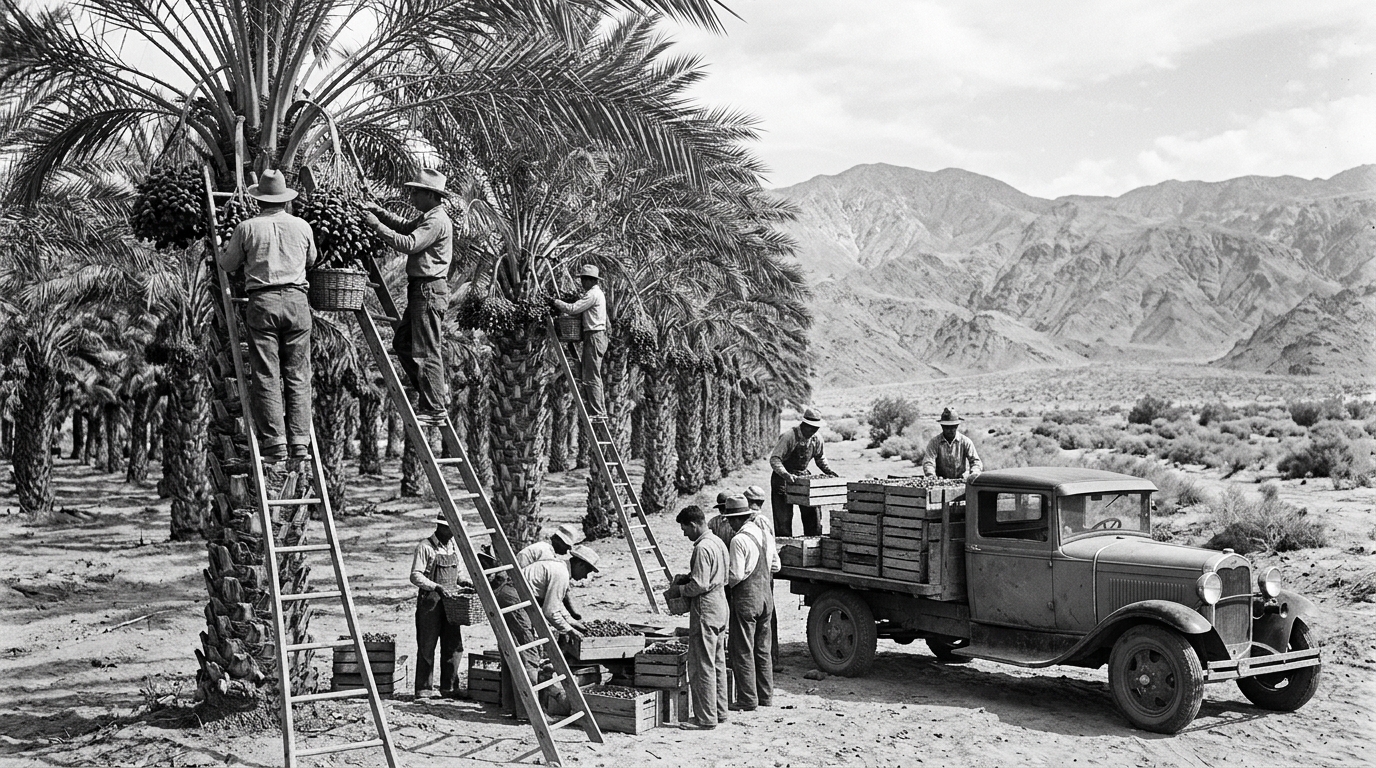
The first date palms were planted in the Coachella Valley around 1900. Early farmers imported date palm cuttings from Iraq, Egypt, and other traditional date-growing regions. These experiments proved successful, and by the 1920s, date farming had become a major industry in the valley.
Indio became the center of this date farming boom. The town’s location on the railroad made it the perfect hub for processing and shipping dates to markets throughout California and beyond. Date packing houses and processing facilities sprang up throughout the town. By the 1930s, Indio was producing and shipping millions of pounds of dates annually.
Shields Date Garden and the Date Industry
One of the most important figures in Indio’s agricultural history was Benson Shields, founder of Shields Date Garden. In 1924, Shields established his date farm and created an innovative business model — rather than just selling raw dates, he created a destination experience. Shields Date Garden became a tourist attraction, drawing visitors who wanted to learn about date farming and purchase fresh dates and date products.
This pioneering approach to agritourism helped establish Indio as a destination, not just a production center. Shields’ success inspired other farmers and entrepreneurs to create similar experiences, laying the groundwork for Indio’s later development as a tourist destination.
Mid-Century Development and Diversification
The mid-20th century brought significant changes to Indio. While date farming remained important, the town began to diversify its economy. Tourism grew as more people discovered the Coachella Valley’s natural beauty and mild winter climate. Resorts, golf courses, and retirement communities began to develop.
The Rise of Golf and Resorts
In the 1950s and 1960s, Indio and the surrounding Coachella Valley experienced a golf boom. Championship golf courses were built, attracting wealthy retirees and tourists. Luxury resorts and spas opened to serve this growing market. The region transformed from a purely agricultural area into a destination for leisure and recreation.
Population Growth and Modernization
Indio’s population grew steadily throughout the mid-20th century. New neighborhoods were developed, schools were built, and modern infrastructure replaced the town’s historic core. While this growth brought prosperity, it also meant that much of Indio’s historic architecture and character was lost to development.
The Festival Era: Coachella and Beyond
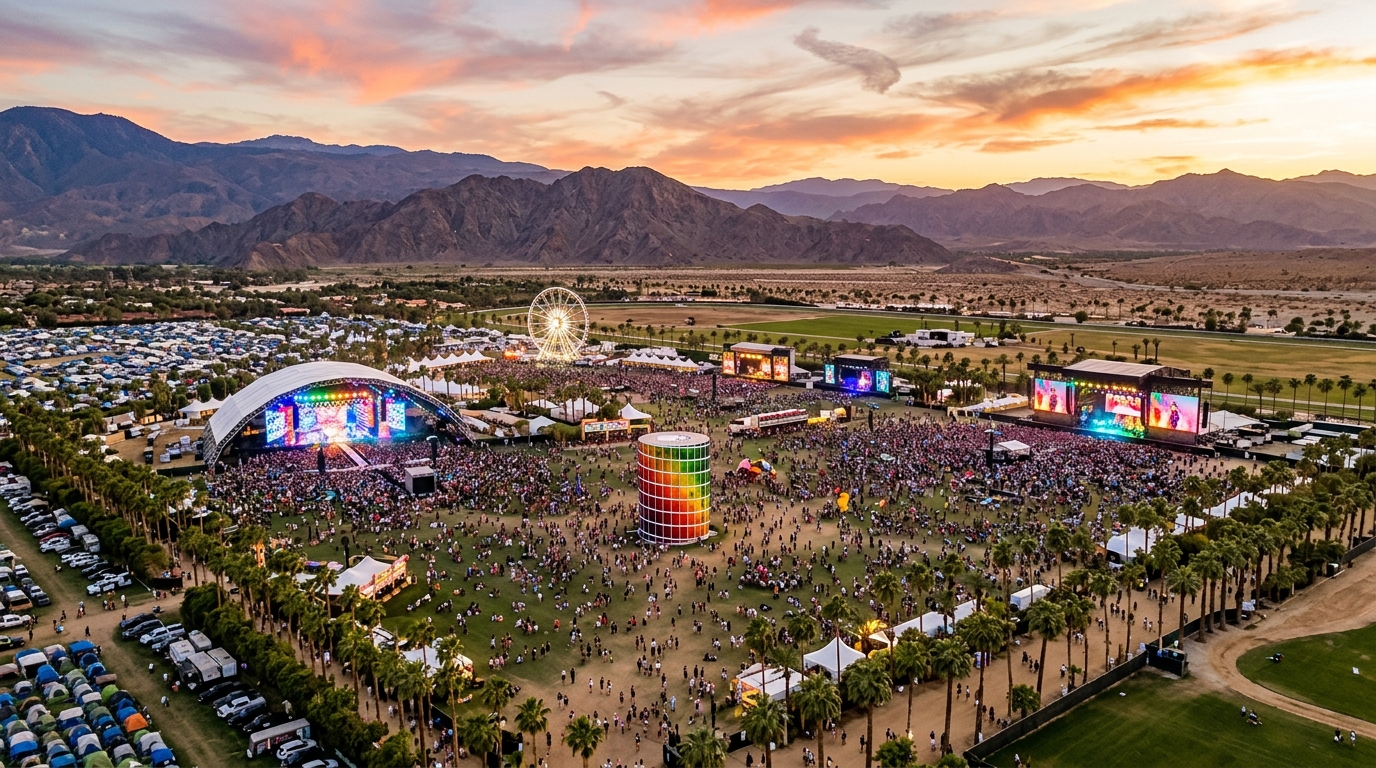
The transformation of Indio from railroad town to agricultural hub to tourist destination reached its culmination with the arrival of major music festivals. In 1999, the Coachella Valley Music and Arts Festival held its first edition at Empire Polo Club in Indio. This event would change the town’s identity forever.
Coachella’s Impact
Coachella quickly became one of the most influential music festivals in North America. The festival attracted hundreds of thousands of visitors annually, generating enormous economic activity for Indio and the surrounding region. Hotels, restaurants, and shops thrived during festival season. The festival’s cultural influence extended far beyond the valley — it shaped music trends, fashion, and popular culture.
In 2004, Stagecoach Country Music Festival was established, offering a country music alternative to Coachella. Like Coachella, Stagecoach became hugely successful, further establishing Indio as a festival destination.
Downtown Revitalization
As festivals brought more visitors to Indio, the town’s downtown area underwent revitalization. Historic buildings were restored, new restaurants and bars opened, and public art installations transformed the streetscape. Downtown Indio became a vibrant cultural hub, attracting locals and tourists alike.
Native American Heritage: The Original Inhabitants
While much of Indio’s modern history focuses on the railroad, agriculture, and festivals, it’s important to acknowledge the region’s original inhabitants. The Cahuilla and Agua Caliente Native American tribes lived in the Coachella Valley for centuries before European settlement. They developed sophisticated water management systems, cultivated native plants, and created a sustainable lifestyle in the desert.
The Agua Caliente Band of Cahuilla Indians continues to maintain a presence in the region today. Their cultural heritage is an important part of Indio’s identity, though it is often overshadowed by more recent history. Recognizing and honoring this heritage is essential to understanding Indio’s complete story.
Key Historical Figures in Indio’s Development
Several individuals played crucial roles in shaping Indio’s history:
Benson Shields
Founder of Shields Date Garden and pioneer of agritourism in the Coachella Valley. Shields’ innovative business model helped establish Indio as a destination and created a lasting legacy that continues to attract visitors today.
Early Railroad Entrepreneurs
The Southern Pacific Railroad executives who identified the Coachella Valley as a strategic location and established the infrastructure that made settlement possible.
Date Farming Pioneers
Farmers who experimented with date cultivation and transformed the Coachella Valley into one of North America’s premier date-producing regions.
Modern Festival Founders
The organizers and entrepreneurs who created Coachella and Stagecoach festivals, transforming Indio into a world-renowned destination.
Indio’s Historical Timeline
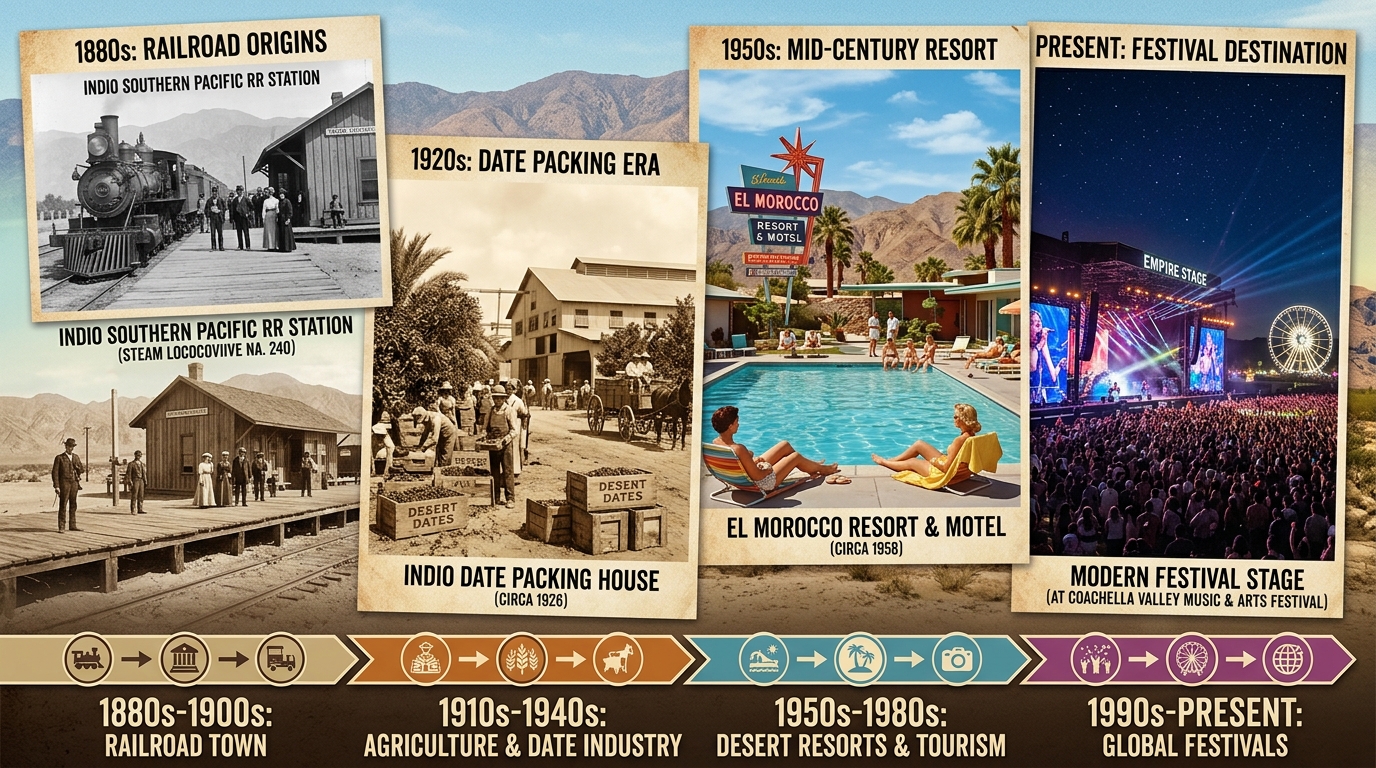
1876: Southern Pacific Railroad establishes station at Indio
1880s: Indio develops as a railroad town with hotels, stores, and residential areas
1900: First date palms planted in Coachella Valley
1924: Benson Shields founds Shields Date Garden
1920s–1930s: Date farming becomes major industry; Indio becomes center of date production
1950s–1960s: Golf course and resort development begins; tourism grows
1970s–1980s: Continued population growth and modernization
1999: First Coachella Valley Music and Arts Festival held at Empire Polo Club
2004: Stagecoach Country Music Festival established
2010s–present: Downtown revitalization, continued festival growth, cultural renaissance
Preserving Indio’s Heritage
As Indio continues to grow and evolve, efforts to preserve its historical heritage become increasingly important. Historic buildings, museums, and cultural organizations work to document and celebrate Indio’s unique history. For visitors and residents alike, understanding this history enriches the experience of living in or visiting this remarkable desert city.
For more information about Indio’s culture and heritage, explore our Culture & History section. We also have detailed articles on specific aspects of Indio’s history, including Shields Date Garden’s role in shaping the region.
Conclusion: From Rails to Festivals
Indio’s journey from a railroad station in the desert to the City of Festivals is a remarkable story of adaptation, innovation, and community. The railroad brought the first settlers; agriculture created prosperity; tourism transformed the economy; and festivals made Indio a global destination. Each era left its mark, creating the vibrant, diverse community that exists today.
Understanding this history helps us appreciate Indio not just as a festival destination, but as a place with deep roots, rich heritage, and a unique character shaped by over 150 years of human endeavor. The next time you visit Indio, take a moment to reflect on this fascinating journey from boom town to city of festivals.